Wednesday, December 12, 2012

Lay Minister

On Sunday at church (Tirau Co-operating Parish) I was given my certificate of Licence for the Office of Lay Minister.

I have been doing the work that it states I can do for a couple of years now and especially this last year as we are with out a vicar or minister. I have preached sermons and take the Liturgy and Communion at both our services.
I have been to training days, schools and courses, for a few years now but our past Vicar didn't finish off the process for me so our Parish Council completed it this year instead.

I am finding more and more that I can do the things this licence says I can do and yet I never would have thought I would in the past. Stepping out in faith, knowing that it is God at work, not me, means that He uses me and I even learn as he speaks to me.

I also received along with the certificate a brass cross from the Diocese of Waikato and Taranaki.

When I was presented this by our interim moderator, Rev Neville Harris, he and a good friend of his sung a song for me.


No. 136 from  "Living Praise", published by Marshall Morgan & Scott"    
The words are attributed to Albert Orsborn.

LET THE BEAUTY OF JESUS BE SEEN IN ME,

Let the beauty of Jesus be seen in me

All His wonderful passion and purity


Oh, Thou Spirit divine, all my nature refine

Till the beauty of Jesus be seen in me

                                 
I felt quite touched by the love that was then showed by all the members of our parish who came forward to embrace and congratulate me.

Saturday, December 8, 2012

Yates Vegie Growing Challenge - Part 3

Well it was feeling like I wasn't getting anywhere with this challenge. What little I had planted just wasn't responding.


Of course the hens go into the garden a lot and when walking on the netting frame were able to pick at ground level. I had omitted to watering the garden too so growth wasn't very tremendous at all. Mind you as the saying goes, "you get what you paid for," and if I wasn't prepared to pay the time I shouldn't expect a huge crop.


The only thing that has grown from my first sewing's were  the beetroot, some carrot and radish - I always have radish. Radish is so quick and easy to grow you just have to be careful to only sew a few at a time. I don't use any chemical product on my vegie garden so it would seem that slugs or something have had a bit of a nibble on the radishes. There was absolutely no sign of any beans so they had been eaten by something. As they were right at the edge of the net it could have been anything.

By this stage I had also attempted to grow some cabbage, cauliflower and broccoli seedlings from seeds on my window sill in the kitchen so I felt game enough to plant them out too.

To protect them from being scratched out of the ground I have learnt to cover them and use large juice containers with the tops cut off as little glasses houses. Needless to say those hens certainly weren't taking much notice of why they were there and would sometimes knock them over while scratching around them.

I really was beginning to think that those hens were going to win this battle and well so much for winning any competition. I do love gardening and there is such satisfaction with going out into the vegetable garden, harvesting what you want and cooking it fresh each day, that you don't get from going to the shop to get what you need.
But I kept at it, you never know I may well win the battle if not the competition.

I did harvest the old carrots and although some were gone to seed a few were quite nice and when roasted straight from the garden were sweet.

Tuesday, December 4, 2012

Jan Eyre

I have just finished reading Jane Eyre by Charlotte Brontë.
It is considered a Classic and was the one I chose when our book club decided to read a classic last month. It took me a lot longer to read that I had thought as I have been busy but also because of the style of writing.

The copy I had (Readers Digest Classics) was still in the same literary style as was originally written by Charlotte in 1847. When it was first pubished it was under the title of Jane Eyre: An Autobiography and was very similar to the life of Charlotte. She used a pen name Currer Bell, in fear of not being considered if she allowed publishers to know she was a woman.

The book was first published in three volumes which was common practice in the 19th Century.

An excellent description of the story can be found here.
I was actually quite drawn to the book as it was very descriptive and draws you in to the character of Jane and indeed her plights in life. It certainly puts the modern quickly produced books to shame.

When Jane Eyre was published in 1847, it became a bestseller. The reviews were on the whole favorable. There was much speculation about whether the writer was a man or a woman and whether the Bells were really three persons, two persons, or just one person. When it became known that a woman had written such a passionate novel and seemed so knowing sexually, the reviews became negative.

The reviewer for the Atlas praised the novel:
 This is not merely a work of great promise; it is one of absolute performance. It is one of the most powerful domestic romances which have been published for many years. It has little or nothing of the old conventional stamp upon it ... but it is full of youthful vigour, of freshness and originality, of nervous diction and concentrated interest. The incidents are sometimes mellow-dramatic, and, it might be added, improbable; but these incidents, though striking, are subordinate to the main purpose of the piece, which is a tale of passion, not of intensity which is most sublime. It is a book to make the pulses gallop and the heart beat, and to fill the eyes with tears (1847).

I have also seen a couple of films of the same story but on re-reading the book again I realise how much is missed from a movie, probably because of a time frame.


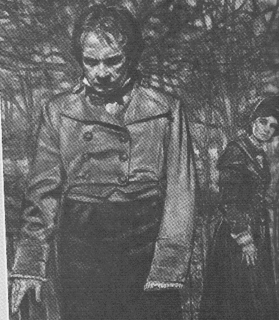
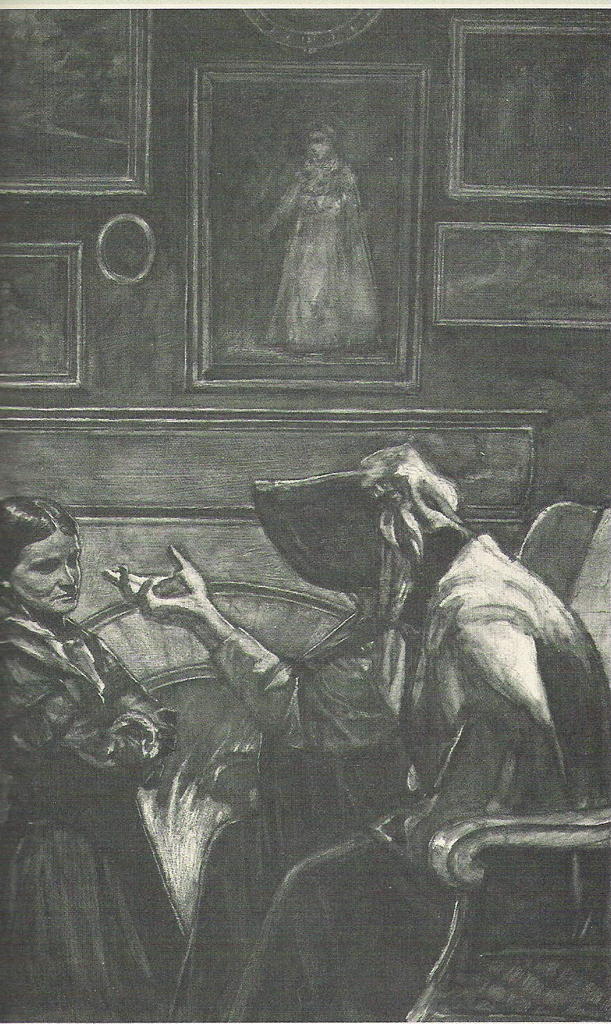
This edition also had some illustrations that are copies of some paintings created by the New York based artist and print-maker, Richard Lenenson. The twelve plates depict scenes from the book in an authentic theme for the times.


Having enjoyed this novel and taken back in time of have challenged myself to read a classic like this a year.

Monday, December 3, 2012

First Sunday in Advent


Sunday 2nd December was the first Sunday in advent for 2012. I was asked to preach at the 8.00am service and this is what I shared below.

Advent – The season of preparation which begins on the fourth Sunday before Christmas and in which the church recalls its hope and expectancy in the comings of Christ, past, present and future. The days are often titled Hope, Love, Joy and Peace. 

Today is the first Sunday in Advent – Hope.

A time of expectant hope, like Mary, of the birth of Jesus our Saviour and Lord.

Why are these four weeks before Christmas called “Advent”? The term comes from a Latin word (adventus) meaning ‘coming, arrival’. We immediately think it refers to the coming of Jesus at Christmastime and that is correct. But it is not the whole story.

In fact, we can speak of three comings of the Lord and all are referred to in the Scripture readings today.

Jeremiah 33:14-16
Luke 21:25-36 
1 Thessalonians 3:11-13 
Three ‘comings’ 

The First Reading from the prophet Jeremiah refers prophetically to the coming of Jesus, our King and Saviour: 
Jeremiah 33: 14 “‘The days are coming,’ declares the Lord, ‘when I will fulfill the gracious promise I made to the house of Israel and to the house of Judah.
15 “‘In those days and at that time I will make a righteous Branch sprout from David’s line; he will do what is just and right in the land.
16 In those days Judah will be saved and Jerusalem will live in safety, This is the name by which it will be called: The Lord Our Righteousness.’
That is the coming of the Child Jesus in Bethlehem, which we anticipate and prepare for in these four weeks. That is what we may call the First Coming.

In Luke 21:25-36 Jesus is talking…we read
25 “There will be signs in the sun, moon and stars. On the earth, nations will be in anguish and perplexity at the roaring and tossing of the sea. 26 Men will faint from terror, apprehensive of what is coming on the world, for the heavenly bodies will be shaken. 27 At that time they will see the Son of Man coming in a cloud with power and great glory. 28 When these things begin to take place, stand up and lift up your heads, because your redemption is drawing near.”
29 He told them this parable: “Look at the fig tree and all the trees. 30 When they sprout leaves, you can see for yourselves and know that summer is near. 31 Even so, when you see these things happening, you know that the kingdom of God is near.
32 “I tell you the truth, this generation will certainly not pass away until all these things have happened. 33 Heaven and earth will pass away, but my words will never pass away.
34 “Be careful, or your hearts will be weighed down with dissipation, drunkenness and the anxieties of life, and that day will close on you unexpectedly like a trap. 35 For it will come upon all those who live on the face of the whole earth. 36 Be always on the watch, and pray that you may be able to escape all that is about to happen, and that you may be able to stand before the Son of Man.”
This speaks in ominous terms of the end of the world and what we refer to as the Second Coming of Jesus at the end of time.

It’s funny how signs continue to be predicted, watched for and ignored. Jeremiah and Jesus foretold coming events, some which were quite hopeful while others are more than a little unsettling. And there were the predictable ones like those seen in nature. We know that as days become shorter, leaves will fall from branches, winds will increase, skies darken and the cold of winter will be upon us. But now the leaves are appearing on the trees and the days are getting longer. But with it comes the dry scorching heat that can cause drought and crops to perish. Since all of these are normal, they don’t alarm us in any way. But when we think of end times we tend to do one of two things: disregard or hunker down in a bunker.

In this passage we must not get lost in all the dire signs and warnings. The point of them is neither to scare us nor to lead us astray into calculating particular dates and events. Instead, “when these things begin to take place, stand up and raise your heads, because your redemption is drawing near” (vs. 28). The promise is that in these events, God’s gracious purposes are being worked out; the divine promises are being kept. Even though it may seem like the world and our lives are out of control, God’s word of promise is given to us so that we will not be drawn into despair or cynicism. And God’s word will not pass away (vs. 33—another promise).
The focus is not on the apocalyptic signs but on the God who is at work.
It is not on the quality of an individuals faith or on one’s focused hoping but on the faithfulness of God, who will carry out the His divine redemption in spite of all we believe we see. The redemption here in this passage is not thought of primarily as forgiveness of sins but as rescue from tribulation as God defeats hostile forces.
This is a time not for predicting or trying to convince the world that the “End is Nigh”, but for testimony (v 13-15). Our testimony. Such testimony will involve both words and faithful actions of people like us infected by hope: we will ourselves be signs, our hope will be contagious, and some around us may also be infected with what is seen in us.

A few years ago, an elderly resident of a nursing home was found fully dressed sitting expectantly in her chair at bedtime. The staff person who discovered her chided: “Lucy, what are you doing? You know it’s time for bed. Now let’s get you into your night gown.”
With a smile on her face, Lucy responded: “No, I’m waiting for Jesus. He’s coming tonight.”
Following her announcement, the attendant figuratively rolled her eyes then insisted that Lucy prepare not for Jesus but for bed. After some resistance, Lucy, the weaker of the two, was forced to give in, dress in night clothes and get into bed. The staff person left but when she looked in the room a short time later, Lucy was dead. Her expression was peaceful for Jesus had, as she earlier predicted, come for her. Then it was that the attendant realized she had ignored the signs.

We read “Lift up your heads,” “Be always on the watch,” “Be careful”; these are not merely bits of moral advice from a great teacher. They are God’s word to all to whom the promises have been given, to encourage us to hope, prayer, endurance, testimony, and faithful obedience in the knowledge that our lives have a place in the great purposes of God as those have been decisively worked out in Jesus Christ.

This then is the Third Coming which forms an important and indispensable link between the First and Second Comings. That is what is spoken about in the Reading from 1 Thessalonians 3:11-13
11 Now may our God and Father himself and our Lord Jesus clear the way for us to come to you. 12 May the Lord make your love increase and overflow for each other and for everyone else, just as ours does for you. 13 May he strengthen your hearts so that you will be blameless and holy in the presence of our God and Father when our Lord Jesus comes with all his holy ones.
It is the welcoming of Jesus into our lives in the here and now. This is something which should take place every day. By it we both acknowledge the First Coming of Jesus in Bethlehem and prepare for the Second Coming at an unknown future date.

The birth of Christ in itself never saved anyone, but in the whole career of Jesus—his birth, teachings, deeds, crucifixion, and resurrection—the God of heaven and earth has drawn near to redeem us, and this work is being carried to completion even now. When we ask Jesus into our hearts and believe in the promises of redemption and the forgiveness of sins we are saved.
This message gives the church a “reason for hope.”

If we want to celebrate the First Coming of Jesus and prepare for his Second Coming, then the way to do it is to be aware of his coming into every moment of every day.
In the journey of life be aware of your surroundings, of the people around you. You may admire the beauty of a morning sky or the loveliness of trees or buildings you pass on your way. The journey and the destination are part of our reality. The going is as important as the arriving and one contributes to the other.

Even though both Jeremiah and Jesus proclaimed the coming destruction of Jerusalem, they also carried messages of hope. The end of one era would be followed by a more glorious and peaceful one. Both the prophet and Jesus called the people to be alert, to pay attention to the signs, like the fig tree and other trees, around them. There would be grief in one time followed by joy in another …the time between end times and beginning times.
According to Jeremiah: “The days are surely coming, says the LORD, when I will fulfill the promise I made to the house of Israel and the house of Judah. In those days and at that time I will cause a righteous Branch to spring up for David; and he shall execute justice and righteousness in the land.”
Jesus said: “Now when these things begin to take place, stand up and raise your heads, because your redemption is drawing near.”

High school English teacher Leonard Beechy commenting on the lectionary passages for this day thinks of this time between the first and second comings of Christ as twilight time. Beechy writes, “Celtic folk called it, the time between the times, the enchanted moments at dusk and at dawn when the veil between his world and the world beyond us is thin, and we seem to breathe its air…The church exists to remind us that we live in the time between the times, between what is dying and what is being born, between the ‘already’ of Christ’s reign and the ‘not yet’ of Advent.” (Leonard Beechy, The Christian Century, November 17, 2009, p. 21)

Soon the signs of the season will be everywhere. Banners hang. Trees stand adorned. Lights shine from roof tops and windows. Music fills the air. We stand in the in-between-time, addressing our shortcomings, letting go of all that gets in the way of our faith, and preparing for the beauty that is promised, the Child who will bring new life to a dying world.
“Be on guard so that your hearts are not weighed down…with the worries of this life, and that day catch you unexpectedly…Be alert at all times, praying that you may have the strength to escape all these things that will take place, and to stand before the Son of Man.”

 All scripture is taken from New International Version 1984

Friday, November 30, 2012

JA 1240 "Jessica"

Saturday last I was out side hanging washing and I heard the sound of what I thought was a steam train.

"No?"

I thought if there was a steam train coming through town we would have heard about it.
But it sounded again.
Checking out on the front deck sure enough there was a steam train stopped down on the railway tracks and it was letting off steam.
I hesitated and so ended up being too slow I later discovered, but I had grabbed my camera and headed for the car. By the time I got down to the tracks the train had moved off.
So what does one do when its a beautiful day and you could just do with a bit of train spotting?


Well.... you chase the train, of course.

So I zoomed into Putaruru, passing the little bus that was taking passengers on a train chasing trip from Matamatm to Tokoroa - they had to pay.

I managed to get into town and near the tracks just as JA 1240 "Jessica" was coming into to Putaruru.
Unfortunately she wasn't stopping at the station so never slowed down but I managed three pics as she raced by.


Train stoker and Driver


The steam train was put on for the Waikato Explorer - Heritage Steam Train Excursion.  
Other photos of the journey can be found here

The locomotive has just come out of a six year restoration and, based at the Glenbrook Vintage Railway, near Waiuku in South Auckland, it traveled from Papakuru through the Waikato to Tokoroa with several stops along the way to fill its water tanks, refill with coal, excursions for the passengers along with other reasons.

With over a hundred years of experience between them, the drivers Bryan Campbell and Neville Simplins said it was a real thrill taking the old girl out. It was the first mainline excursion for JA 1240 since being fully restored by the Mainline Steam Heritage Trust and the trip was organised by New Zealand Rail Enthusiasts.

Hillside JA's
JA 1240 "Jessica" was preserved by Blenheim man Peter Coleman, and was stored serviceable at his Blenheim property. In 1988 after his death, JA 1240 was purchased by Ian Welch, and in 1990 traveled to Mainline Steam's Parnell Depot. This locomotive's restoration for mainline use (as a coal burner) has been completed, and will be based in Christchurch. It has been named after one of owner Ian Welch's granddaughters.


Wednesday, November 14, 2012

Solar Eclipse

According to Wikipedia...

Solar eclipse A solar eclipse occurs when the Moon passes in front of the Sun as seen from the Earth. The type of solar eclipse event depends on the distance of the Moon from the Earth during the event. A total solar eclipse occurs when the Earth intersects the umbra portion of the Moon's shadow. When the umbra does not reach the surface of the Earth, the Sun is only partially occulted, resulting in an annular eclipse. Partial solar eclipses occur when the viewer is inside the penumbra.
 

Did you get that?
No neither did I!
In other words...
As seen from the Earth, a solar eclipse occurs when the Moon passes between the Sun and Earth, and the Moon fully or partially blocks the Sun. In a total eclipse, the disk of the Sun is fully obscured by the Moon. In partial and annular eclipses only part of the Sun is obscured.

As reported from Royal Astronomical Society of New Zealand :

ECLIPSES DURING 2012

There are four eclipses predicted for 2012, two each of the Sun and Moon. Of there three are visible from New Zealand, although very little change will be visible during one of the lunar. eclipses. The second solar eclipse in November will be total, but only visible as partial from New Zealand, although seen as a very deep eclipse from the far north. The first solar eclipse in May is annular, visible across the north Pacific Ocean...

The second solar eclipse is on November 13. This is total, but the path of totality crosses even less land than May's annular eclipse. It starts at dawn in the north of Northern Australia. After crossing the Gulf of Carpentaria and York Peninsula including Cairns, the total eclipse path then heads across the southern Pacific, touching no further land.

So that meant I was going to go out to take pics. Now I know you cannot look at the sun or watch it but if I just held up the camera and aimed surely I would get some photos. 
Hmm... well not so, but I am pleased to say I did get one or two out of the twenty or so I took!


At first I thought if I stood in the shade and stuck my hand and camera out I could just take pics of the sun. Well sure that happened but all you see is this.

First pic was at 9.10 when the eclipse was starting

As the morning progressed, I went to work and was soon thinking wow this is going to be great, its getting duller already.


I went outside to take another pic only to be greeted with this.
No wonder the sun wasn't shinning as bright - the clouds had arrived. These were not in the weather report, or were they?
How was I going to take photos now?

I actually felt disappointed. I was thinking I was going to do a blog entry and it was going to be so cool with all my photos!


I waited for a bit to see if I could grab a moment when the sun peeped between some clouds.
Unfortunately the odd time that happened and I managed to take a shot I still just got a glare of sun and no indication of an event of any sort.

The whole idea was rapidly going down hill.

In the end with the need of getting on with my work and not having to stay too long after 12.00 I just snapped away at the sunny hoping that something would come out of a photo.

I got home and checked out the TVNZ website to see what photos others had taken and soon discovered that having the clouds was a bonus. I wondered if I had any shots like some of theirs.

And to my surprise I discovered when I cropped the pics down I had some almost as good.

Original pic


 So thanks to the clouds here I my pics of the eclipse.

 November 14th 2012
My best November 14th 2012
My best - touched up


Sunday, November 4, 2012

The Italian Wedding

As I have recently read a Nicky Pellegrino book that I enjoyed I felt I was going to like this one too.

The Italian Wedding also boasts a subtitle reading: “Two feuding families, two love stories and a feast of delicious Italian food”.

Beppi Martinelli is an Italian, married to an Englishwoman and living in London with his wife and two young adult daughters. He owns a restaurant called Little Italy and the younger of his two daughters works with him, while the other, the principal character in the novel, Pieta, is a designer of bridal gowns. The Martinellis are a typical Italian family: fighting, eating and loving in equal measure. The younger sister is soon to be married and Pieta, since she is a bridal designer, is of course making the gown. But Pieta is distracted by a series of mysteries and unanswered questions. Why is her father feuding with another Italian in the neighbourhood? Why is her mother so troubled, faded and sad? And could the man she's always held a torch and secretly cared for really be getting married to someone else? Beppi, after anarguement with his youngest daughter has a heart attack and is in hospital. As Pieta stitches and beads her sister's wedding gown her mother helps so they can both be distracted with Beppi's health issues. In the course of their time together she uncovers the secrets that have made her family what it is and that stand between her and happiness. 
Her mother tells her how she came to hitch-hike to Rome all those years before where she met and fell in love and married Beppi and how she eventually persuaded him to return to London with her. As the wedding draws nearer, Pieta uncovers the secrets that have made her family what it is – and may stand between her and happiness. 
So there are two stories running parallel through the novel, stories of two generations of the Martinelli family. They are stories of feasts of food (lots of food) and love, family feuds, cultural dislocations and generational differences. It's about discovering who your parents really are. And who you really want to be. 
 
Nicky dedicates this book to her parents who on the face of it sound very much like Beppi & Caterina Martinelli though in her postscript she states that while her parents’ story is the base that gave the book its flavor Beppi and Caterina are not her mother and father.

In real life though her mother did hitch-hike to Italy with her girlfriends where she met her future husband in Rome and took him home to the UK.
Later Nicky was born and her father, clearly a skilled chef, (Beppi’s recipes in the book are apparently her father’s recipes), instilled in her a passion for food and taught her what all Italians know that you live to eat instead of eating to live.